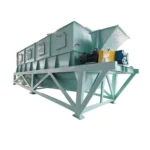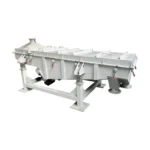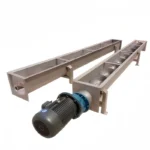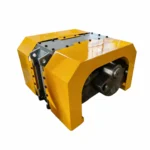




 A vibrating screen plays an essential role in mining, quarrying, and mineral processing. It separates materials into different sizes, improves screening efficiency, and helps processing plants maintain a consistent product quality.
But how does a vibrating screen work? What components determine its performance? And how can you choose the right screening equipment for your application?
In this article, we’ll explore the vibrating screen working principle, common screen types, key components, and factors that influence screening performance.
1. How Does a Vibrating Screen Work?
A vibrating screen uses controlled mechanical vibration to move and separate materials across a screening surface.
First, a feeder delivers raw material onto the screen deck. Then, the vibration moves the material forward while continuously spreading and stratifying it. Smaller particles pass through the screen openings, while larger particles remain on the deck and move toward the discharge end.
This process separates materials according to particle size and produces different grades of finished material.
A typical vibrating screening process involves three main stages:
Feeding: Material enters the screen through a feed chute or conveyor.
Screening: Vibration moves and stratifies the material, allowing undersized particles to pass through the screen mesh.
Discharge: The screen separates the material into different size fractions.
As a result, a properly designed vibrating screen can improve screening efficiency, reduce unnecessary material handling, and support continuous production.
2. Common Types of Vibrating Screens
Different applications require different screening motions and equipment configurations. Therefore, manufacturers offer several types of industrial vibrating screens.
Inclined Vibrating Screen
An inclined vibrating screen uses an angled screen deck to help material travel across the screening surface. Gravity and vibration work together to move material toward the discharge end.
This design is widely used in mining, quarrying, and aggregate production.
Horizontal Vibrating Screen
A horizontal vibrating screen operates with a nearly level screening surface. It relies on its vibration motion to transport and separate material.
It works well in applications that require controlled material movement and efficient screening.
Circular Motion Vibrating Screen
 A circular motion vibrating screen produces a circular movement of the screen deck. This motion helps loosen and stratify material, allowing particles to move across the screening surface.
Many mining and aggregate operations use this type of screen for material classification.
Linear Motion Vibrating Screen
A linear motion vibrating screen moves material along a relatively straight path. Depending on the design, it can provide controlled material transport and effective separation.
The choice between circular and linear motion depends on material characteristics, capacity requirements, and the screening process.
3. Key Components of a Vibrating Screen
A vibrating screen combines several mechanical components to achieve stable and efficient operation.
Vibration Motor
A vibration motor generates the excitation force that drives the screening equipment. Depending on the equipment design, one or more vibration motors can produce the required vibration.
The motor’s power, exciting force, installation arrangement, and operating frequency all influence machine performance.
Vibrating Screen Exciter
A vibrating screen exciter generates the vibration required by the screen through an excitation mechanism, often using eccentric weights and a mechanical drive system.
An exciter gearbox may form part of this system. It plays an important role in transmitting power and producing the required vibration motion.
Vibration motors and mechanical exciters serve related purposes, but they are not the same component. Equipment design determines which drive system is appropriate.
Screen Deck and Screen Mesh
The screen deck supports the screening surface, while the screen mesh or screen panel provides the openings that separate particles by size.
The opening size, material, and deck configuration directly affect screening accuracy and product quality.
Spring Suspension
Springs support the vibrating screen and isolate much of the vibration from the supporting structure. Their stiffness and arrangement must match the equipment’s weight and dynamic requirements.
Screen Frame
The screen frame provides structural support for the screen deck, drive system, and other components. A robust frame helps the machine withstand repeated vibration and demanding operating conditions.
4. Factors That Influence Screening Efficiency
A vibrating screen’s performance depends on more than its motor power or screen area. Several operating and design factors work together.
Vibration amplitude and frequency: These parameters determine how the screen moves and how the material responds. The correct combination helps particles stratify and pass through the screen openings.
Screen inclination: The deck angle affects material travel speed and screening time. A suitable angle balances capacity with separation efficiency.
Screen surface and opening size: The screen mesh must match the required product size and material characteristics.
Material properties: Particle size distribution, moisture content, bulk density, and material shape can all affect screening performance.
Feeding conditions: An even and consistent feed helps distribute material across the deck. Uneven feeding can reduce effective screen area and create poor separation.
In addition, operators should consider the relationship between material travel rate, vibration intensity, and screening time. Adjusting these factors together can help improve overall performance.
5. Applications of Vibrating Screens in Mining and Industry
Vibrating screens serve a wide range of industries because they handle different materials and separation requirements.
Common applications include:
Mining: Screening ores and separating mineral materials at different processing stages.
Quarrying: Classifying crushed stone, gravel, and other aggregates.
Mineral Processing: Separating materials before or after crushing, grinding, and other processing operations.
Coal Processing: Classifying coal and removing unwanted particle sizes.
Construction Materials: Producing aggregates with specific size distributions.
Recycling: Separating reusable materials according to particle size.
In mining operations, a reliable mining vibrating screen helps maintain a stable material flow and supports the performance of the entire processing plant.
6. How to Choose the Right Vibrating Screen
Before selecting screening equipment, consider the following questions:
What material do you need to screen?
What is the required processing capacity?
What particle size range do you need to separate?
What moisture content and material characteristics should the equipment handle?
Do you need a single-deck or multi-deck vibrating screen?
Which vibration system best suits your application?
What installation conditions and maintenance requirements should the equipment meet?
A professional vibrating screen manufacturer can evaluate these factors and recommend a suitable machine configuration.
7. Choose a Reliable Vibrating Screen Manufacturer
Choosing the right equipment manufacturer matters just as much as selecting the right screen type. A qualified manufacturer should understand screening processes, equipment structures, vibration systems, and the operating conditions of different industries.
As a manufacturer of stationary screening equipment and vibration motors, we focus on providing screening solutions for demanding industrial applications.
Our product range includes fixed vibrating screening equipment and vibration motors. We also understand the importance of matching the vibration system with the overall screen design.
Whether you need a mining vibrating screen, industrial screening equipment, or vibration motors for screening applications, selecting the right configuration can help improve production efficiency and equipment reliability.
Contact us to discuss your screening requirements and find a suitable solution for your operation.