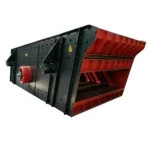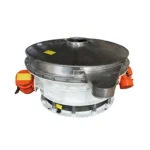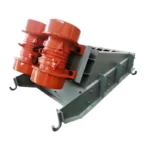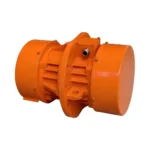




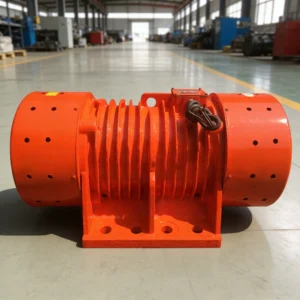
 Vibration motors are widely used in mining, quarrying, construction, recycling, chemical processing, food processing and other industries. They provide the vibration force required for equipment such as vibrating screens, feeders, conveyors and other material-handling machines.
However, choosing the right vibration motor is not simply a matter of selecting a motor with a higher power rating. The motor must match the equipment design, required centrifugal force, operating conditions and installation method.
In this article, we will discuss several important factors to consider when selecting a vibration motor.
1. What Is a Vibration Motor?
A vibration motor is an electric motor equipped with eccentric weights. When the motor rotates, the eccentric weights generate centrifugal force, producing mechanical vibration.
Compared with conventional vibration systems that use a separate drive mechanism, vibration motors can provide a relatively simple and compact source of vibration.
They are commonly used on:
Vibrating screens
Vibrating feeders
Vibrating conveyors
Hopper and silo dischargers
Screening machines
Dewatering screens
Material handling equipment
For mining and aggregate applications, vibration motors are particularly common in vibrating screens and feeders.
2. Centrifugal Force Is One of the Most Important Parameters
When selecting a vibration motor, centrifugal force is usually more important than motor power alone.
The centrifugal force determines how strongly the equipment can vibrate. Different machines require different levels of vibration depending on their size, material load and operating conditions.
For example, a small feeder may require a relatively low centrifugal force, while a large mining vibrating screen may require several vibration motors with much higher force.
Therefore, the vibration motor should be selected according to the required excitation force of the equipment rather than simply choosing the largest available motor.
3. Motor Power and Speed
Motor power and rotational speed are also important parameters.
Common vibration motor speeds include approximately:
2-pole: around 3,000 rpm
4-pole: around 1,500 rpm
6-pole: around 100 rpm
8-pole: around 750 rpm
The actual speed depends on the motor frequency and operating conditions.
Different speeds produce different vibration characteristics. Higher-speed motors can provide high-frequency vibration, while lower-speed motors are often used where a larger vibration amplitude or different material-handling characteristics are required.
The correct combination of speed and centrifugal force should be determined according to the equipment design.
4. Single or Double Vibration Motors?
Many vibrating screens and feeders use two vibration motors.
When two motors are installed on the same machine and rotate in opposite directions, they can generate a controlled linear vibration through self-synchronization.
This configuration is widely used in:
Linear vibrating screens
Dewatering screens
Vibrating feeders
Heavy-duty screening equipment
The installation angle, motor position and direction of rotation are important. Incorrect installation can result in poor screening performance, excessive vibration or unnecessary mechanical stress.
5. Check the Working Environment
Mining equipment often operates in harsh environments with dust, moisture and continuous mechanical vibration.
Therefore, environmental conditions should be considered when selecting a vibration motor.
Important factors include:
Protection rating
Ambient temperature
Dust and moisture exposure
Continuous operating time
Installation conditions
Hazardous-area requirements, if applicable
For outdoor mining and aggregate applications, a suitable enclosure and protection level are particularly important.
6. Pay Attention to the Installation
Even if the vibration motor itself is correctly selected, improper installation can cause problems.
The mounting surface should be strong and sufficiently rigid. Mounting bolts must be properly tightened, and the motor should be installed according to the equipment manufacturer’s requirements.
Loose mounting bolts can lead to:
Increased noise
Abnormal vibration
Bolt failure
Damage to the motor or equipment
Reduced service life
For heavy-duty vibrating screens, the mounting structure is especially important because the equipment is exposed to continuous dynamic loads.
7. Why Correct Motor Selection Matters
An oversized vibration motor does not necessarily mean better performance.
Excessive excitation force may increase:
Structural stress
Energy consumption
Bearing load
Noise and vibration
Maintenance requirements
On the other hand, an undersized motor may not provide enough vibration force to achieve the required screening or conveying performance.
The goal is therefore to select a vibration motor that provides the right centrifugal force, speed and power for the specific application.
Conclusion
Selecting a vibration motor requires more than looking at the motor’s kW rating. Centrifugal force, rotational speed, equipment structure, installation method and working environment all need to be considered.
For vibrating screens and feeders used in mining and aggregate applications, the correct vibration motor can significantly affect screening efficiency, equipment reliability and service life.
At Xinxiang Vibration Motor Co., Ltd., we manufacture vibration motors for a wide range of industrial applications, including vibrating screens, feeders and material-handling equipment.
If you are designing a new vibrating machine or looking for a suitable replacement vibration motor, providing the equipment specifications, required force, speed, power, voltage and installation dimensions can help determine the appropriate model.